Last updated 2026-07-26
TL;DR
DSIP (delta sleep-inducing peptide) is administered subcutaneously in research settings, injected into the abdomen or thigh fat with an insulin syringe, much like other small peptides. There's no approved human protocol; technique below reflects standard subcutaneous injection practice, not a validated DSIP-specific method. Human sleep efficacy data are old, thin, and mostly from small 1980s-90s trials.
What is DSIP and why is injection technique even a question?
DSIP stands for delta sleep-inducing peptide, a nonapeptide (nine amino acids) first isolated from rabbit brain blood in the 1970s by Swiss researchers Schoenenberger and Monnier [1]. It got its name because early studies suggested it could induce delta wave (slow-wave) sleep activity when introduced into animal brains. That naming has aged badly for marketing purposes, because the human evidence never caught up to the name. There is no FDA-approved DSIP product, no standardized clinical dosing regimen, and no package insert telling you how to inject it. Everything written about "how to inject DSIP," including this article, is describing general subcutaneous injection technique borrowed from other peptides, not a technique validated for DSIP specifically. If you're using DSIP in a research context, you're extrapolating from general peptide handling practices, not following an approved protocol. That distinction matters. A lot of the material online conflates "here's how peptides are usually injected" with "here's the DSIP protocol," as if the second thing exists in some settled, tested form. It doesn't. For the underlying research and what the human trials actually found, see the main DSIP overview.
How is DSIP typically administered: subcutaneous vs intramuscular vs IV?
In the human studies that exist, DSIP was given by intravenous infusion, not casual subcutaneous injection. The original clinical work by Monnier, Schoenenberger, and colleagues, and later small studies through the 1980s and 90s, used IV administration in supervised lab or hospital settings [1][2]. That's a meaningfully different delivery method than the subcutaneous injections most people picture when they think about self-administered peptides. In the peptide research community outside those original studies, DSIP is generally handled the same way other small peptides (like BPC-157 or ipamorelin) are handled: reconstituted with bacteriostatic water and injected subcutaneously with an insulin syringe. This is a practical convention borrowed from adjacent peptide practice, not something derived from a DSIP-specific safety or pharmacokinetic study. Nobody has published human subcutaneous bioavailability data for DSIP that I can point you to. Intramuscular injection is sometimes mentioned in peptide forums but has essentially no dedicated pharmacokinetic support for DSIP either. Subcutaneous is the default convention in the broader research peptide space because it's simpler, has a lower complication rate than IM, and doesn't require the injection depth precision IM demands.
| Route | Used in original human studies? | Common in current peptide practice? | Data behind it |
|---|---|---|---|
| Intravenous | Yes, primary method in 1970s-90s trials [1][2] | Rare outside clinical settings | Original small studies only |
| Subcutaneous | Not the studied route | Most common current convention | Borrowed from general peptide practice |
| Intramuscular | Not the studied route | Occasionally mentioned | No dedicated data |
What supplies do you need before injecting DSIP subcutaneously?
If you're working with a lyophilized (freeze-dried) DSIP vial through a provider-reviewed source, you need a short supply list: bacteriostatic water for reconstitution, an insulin syringe (typically 0.3 mL to 1 mL with a 29-31 gauge needle), alcohol swabs, and a sharps container for disposal. Bacteriostatic water is preferred over sterile water without preservative because it allows the reconstituted solution to be stored for longer between uses without the same contamination risk. The CDC's general guidance on safe injection practices calls for single-patient use of needles and syringes and proper handling of medication vials to prevent infection transmission, principles that apply directly here even though DSIP itself isn't a CDC-reviewed product [3]. Don't reuse needles. Don't share vials across draws without a clean needle each time. Don't inject if the reconstituted solution looks cloudy, discolored, or has particulate in it, that's a sign of degradation or contamination and the vial should be discarded. For the actual math on how much bacteriostatic water to add and how many mcg end up in each syringe unit, use a dedicated DSIP dosage calculator rather than guessing. Reconstitution errors are one of the most common ways people end up dosing 3x or 10x what they intended.
Step by step: how do you actually inject DSIP subcutaneously?
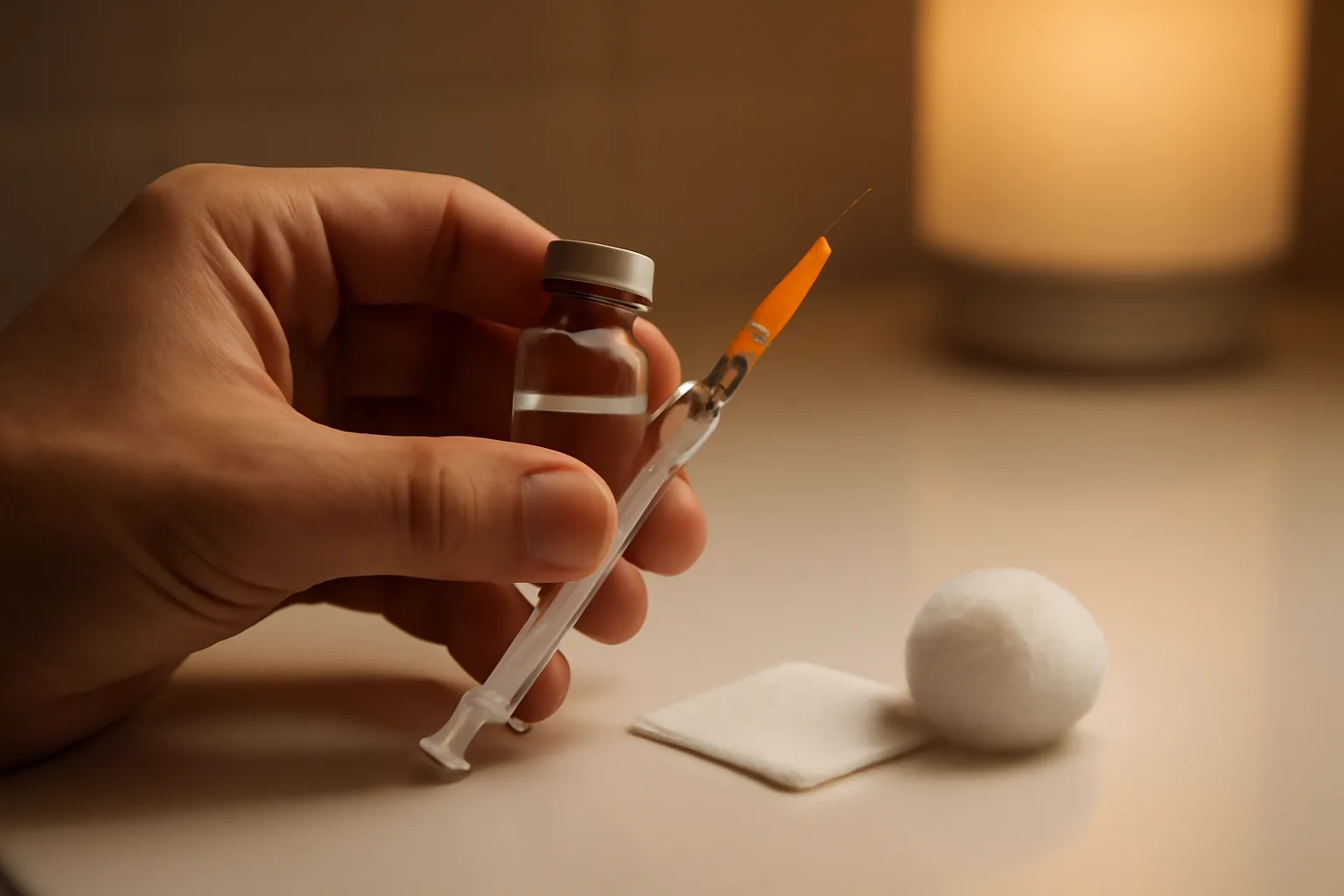
This is general subcutaneous injection technique, the same steps used for insulin, HGH, and most small reconstituted peptides. It is not a DSIP-specific clinical protocol because none exists. 1. Wash your hands thoroughly with soap and water. 2. Wipe the vial's rubber stopper with an alcohol swab and let it air dry for a few seconds. 3. Draw air into the syringe equal to the dose you intend to withdraw, inject that air into the vial (this equalizes pressure and makes draw-up easier), then invert the vial and draw your dose slowly, checking for air bubbles. 4. Tap the syringe gently to move bubbles to the top, then push a small amount of liquid back into the vial to clear them. 5. Pick an injection site: the abdomen (at least two inches from the navel), the front or outer thigh, or the back of the upper arm are the standard subcutaneous sites used for insulin and similar injections. 6. Clean the site with a fresh alcohol swab and let it dry. 7. Pinch a fold of skin (not muscle) between two fingers, insert the needle at a 45 to 90 degree angle depending on your body fat at that site, and push the plunger slowly and steadily. 8. Withdraw the needle, apply light pressure with a clean cotton ball or gauze (don't rub), and dispose of the needle immediately in a sharps container. The entire process, once you're set up, takes under two minutes. The two failure points people actually hit are air bubbles (which just waste a small amount of dose, they're not dangerous in a subcutaneous injection of this volume) and hitting a site that's already bruised or irritated from a prior injection.
Where on the body should you inject DSIP?
Rotate between the abdomen, outer thigh, and back of the upper arm, the same rotation used for insulin therapy. Injection technique guidance from groups like the Forum for Injection Technique recommends rotating sites within and between these general regions specifically to prevent lipohypertrophy, a lumpy buildup of fat tissue under the skin caused by repeated injections in the same small spot. Lipohypertrophy isn't just cosmetic. It can also change how a substance absorbs from that site over time, which matters if you're trying to keep dosing consistent. A simple rotation schedule, left abdomen, right abdomen, left thigh, right thigh, cycling through over days, keeps any one spot from taking repeated hits. Avoid injecting into scar tissue, moles, stretch marks, or any area that's bruised, swollen, or tender from a previous injection. Avoid the two-inch zone immediately around the navel, that area has thinner tissue and more blood vessels close to the surface.
What time of day should DSIP be injected, and does timing matter?
Because DSIP's name and the small original studies focused on sleep and delta-wave activity, most people using it experimentally inject it in the evening, roughly 30 to 60 minutes before their intended sleep time. That timing logic comes from the premise being tested (a sleep-related peptide should act before sleep), not from a pharmacokinetic study establishing an optimal injection window in humans. The honest answer is that nobody has published human data establishing an ideal injection time, half-life-based dosing window, or time-to-effect curve for subcutaneous DSIP. The original IV studies from the 1970s-90s measured effects during controlled overnight EEG monitoring in a lab, a completely different context than someone injecting at home and going to bed [1][2]. If you're going to experiment with timing at all, pre-bed administration is the only logically consistent choice given the stated premise. But treat any claimed "optimal window" you see elsewhere as guesswork dressed up as protocol.
How do you reconstitute and store DSIP correctly?
Reconstitution means adding liquid (bacteriostatic water) to the lyophilized powder in the vial to make an injectable solution. Add the water slowly down the inside wall of the vial rather than directly onto the powder, and swirl gently rather than shaking, vigorous agitation can damage the peptide's structure. Once reconstituted, DSIP (like most peptides) should be stored refrigerated at roughly 2 to 8°C (36 to 46°F) and used within the manufacturer's stated window, commonly cited as somewhere between 2 to 4 weeks for many peptides reconstituted with bacteriostatic water, though this varies by product and isn't independently verified for DSIP specifically since there's no FDA-reviewed stability data for it as a marketed product. Before reconstitution, unopened lyophilized peptide is generally more stable and can often be stored frozen for longer periods, again per general peptide-handling convention rather than DSIP-specific stability testing. Never leave a reconstituted vial at room temperature for extended periods, and never freeze it after reconstitution, freeze-thaw cycles degrade peptide structure.
What's the right dose per injection, and how do you measure it?
There is no established human clinical dose for DSIP because there's no approved product and no completed dose-ranging trial in the modern sense. The original studies used IV doses in small samples, not the kind of large-scale dose-response study that would let anyone confidently say "X mcg is the effective subcutaneous dose" [1][2]. Common protocols circulating in the peptide community land in the range of 100 to 300 mcg per injection, but that range comes from community convention and vial concentration norms, not from a dose-finding trial. Treat any number you see, including that one, as an unvalidated community heuristic rather than a clinical recommendation. Measuring an accurate dose from a reconstituted vial requires knowing your concentration (mcg per mL) after reconstitution, then converting that to the syringe units you need to draw. This is exactly the calculation a DSIP dosage calculator is built for, and it's worth using one rather than eyeballing syringe markings, because insulin syringes are marked in units (typically 100 units per mL) and the conversion to mcg is not intuitive. For a fuller breakdown of dosing ranges, frequency, and how people cycle DSIP use, see the dedicated DSIP dosage guide.
What are common injection mistakes and how do you avoid them?
The most common technical mistake is injecting into muscle instead of subcutaneous fat, especially in leaner people using the thigh or arm sites. Pinching a real fold of skin before inserting the needle, and using a shorter needle (the 29-31 gauge, 0.5-inch needles standard in insulin syringes), largely prevents this. The second most common mistake is inconsistent reconstitution, adding a different amount of bacteriostatic water each time you reconstitute a new vial, which silently changes your actual dose even though you're drawing the same syringe units. Write down your reconstitution volume every time and keep it consistent. Third is site fatigue: injecting the same quarter-inch of skin repeatedly because it's convenient, which leads to the lipohypertrophy and absorption inconsistency mentioned earlier. Rotate on a fixed schedule rather than by feel. Fourth, and this one's more about judgment than technique: injecting from a vial that's been sitting reconstituted past its stability window, or that looks cloudy or has floating particles. When in doubt, don't use it. A wasted vial costs less than a bad infection or an unpredictable dose.
What side effects or reactions should you watch for after injecting DSIP?
Local injection site reactions, redness, mild swelling, small bruising, are the most commonly reported issues with subcutaneous peptide injections generally, and DSIP is no exception in the anecdotal record. These typically resolve within a day or two. Beyond local site reactions, there isn't a well-characterized human adverse event profile for DSIP specifically, because there isn't a body of large, modern controlled human trials to characterize one from. The original small studies from the 1970s-90s didn't report the kind of systematic adverse event tracking that a modern Phase 2 or 3 trial would produce [1][2]. For the fuller picture on what's actually been reported, what's plausible based on the peptide's structure, and what's simply unknown, see the dedicated DSIP peptide side effects page. If you notice anything beyond mild, transient site irritation, stop use and consult a physician rather than trying to self-diagnose against forum anecdotes.
How strong is the human evidence that DSIP actually improves sleep?
Thin, old, and mixed. That's the honest short version. The foundational animal work identifying DSIP and its sleep-related activity dates to the 1970s [1]. Human studies that followed were small, often uncontrolled or weakly controlled by current standards, and produced inconsistent results on whether DSIP reliably improved subjective sleep quality or objective EEG sleep architecture in insomnia patients [2]. A frequently cited human study, published in peptide and sleep research literature through the 1980s, examined DSIP in patients with sleep disturbances and reported some improvements in specific sleep parameters, but sample sizes were small and the work has not been replicated at scale with modern trial design, randomization standards, or blinding rigor that would satisfy current evidence bars [2]. No DSIP product has completed the kind of large randomized controlled trial that FDA approval for an insomnia indication would require. That gap between the compound's evocative name and its actual evidentiary record is the single most important thing to understand before using it for sleep. "Delta sleep-inducing peptide" describes a hypothesis researchers were testing in the 1970s, not a settled human finding. Some of the strongest activity data is preclinical, meaning it comes from animal or cell-based experiments, and preclinical findings routinely fail to translate into human clinical effects. There is no large modern trial showing DSIP reliably improves human sleep, and nothing here should be read as a claim that it does. For the full study-by-study breakdown, the DSIP hub page is the place to go deeper.
Where should you source DSIP if you're going to use it?
Given that DSIP is not an FDA-approved drug and has no standardized manufacturing oversight comparable to a prescription medication, sourcing quality varies enormously across the research chemical and peptide markets. Purity, actual peptide content versus label claim, and sterility of the vial are all things that vary by supplier with no regulatory floor guaranteeing any of them. A provider-reviewed sourcing route, one where a pharmacy partner handles fulfillment under some form of quality oversight rather than an anonymous research-chemical storefront, is the more defensible option if you're going to proceed at all. DSIP Peptide's buy DSIP guide walks through what a provider-reviewed, pharmacy-fulfilled route looks like versus the alternative. Whatever the source, look for a certificate of analysis for the specific batch you're buying, not a generic one for the product line, and treat any listing that won't produce one as a pass.
How does DSIP injection compare to oral or nasal delivery claims?
You'll occasionally see DSIP marketed in oral capsule or nasal spray form. Peptides like DSIP are generally poor candidates for oral delivery because they're broken down by digestive enzymes before meaningful absorption can occur, which is exactly why the original human research used IV administration rather than a pill [1][2]. There is no published human bioavailability data showing an oral DSIP product achieves meaningful systemic exposure. Nasal delivery has been explored for some peptides as a way to bypass digestive breakdown, but there's no dedicated DSIP nasal bioavailability study I can point to that establishes this route works for this specific peptide. If a product is marketed as an oral or nasal DSIP formulation without any accompanying absorption data, that's a marketing claim outrunning the science, not an established alternative route.
Frequently asked questions
Can you inject DSIP intramuscularly instead of subcutaneously?
There's no dedicated human data comparing IM to subcutaneous DSIP administration. Subcutaneous is the current default convention in peptide research practice because it's simpler and lower-risk than IM, not because it's been shown superior for DSIP specifically. The original clinical studies used IV, not IM or subcutaneous.
How many mcg of DSIP should you inject per dose?
There's no clinically established human dose. Community protocols commonly cite 100 to 300 mcg per injection, but that range comes from convention, not a completed dose-ranging trial. Use a dosage calculator to convert your reconstituted concentration into accurate syringe units rather than guessing.
What needle size do you use for DSIP injections?
Standard insulin syringes with 29 to 31 gauge needles, typically 0.5 inches long, are the convention used for subcutaneous DSIP injection, matching the needles used for insulin and similar small-volume subcutaneous peptide doses.
Does DSIP need to be refrigerated after mixing?
Yes. Once reconstituted with bacteriostatic water, DSIP should be stored refrigerated at roughly 2 to 8°C and used within the stability window stated by your source, commonly weeks rather than months. Unopened lyophilized powder is generally more stable and can often be frozen before reconstitution.
Is it better to inject DSIP in the morning or at night?
Most people inject in the evening, 30 to 60 minutes before intended sleep, based on the sleep-related premise the compound was originally studied for. There's no published human pharmacokinetic study establishing an optimal injection window, so this timing is inference, not established protocol.
What does the human research actually say about DSIP and sleep?
It's thin and old. Small human studies from the 1970s-90s produced mixed and inconsistent results on sleep parameters, and none has been replicated in a large modern randomized trial. Much of the strongest activity data is preclinical (animal), and animal sleep findings don't reliably predict human results.
Can you reuse a DSIP syringe or needle?
No. Needles and syringes should be single-use only. Reusing them raises infection risk and can dull the needle, making injection more painful and less precise. Dispose of every needle immediately in a sharps container after use.
What happens if you inject DSIP into a vein by accident?
Subcutaneous technique with a short, thin needle and a proper skin-fold pinch makes hitting a vein unlikely, but if you draw back and see blood in the syringe (a step some protocols include), withdraw and choose a new site. Original human DSIP research used deliberate IV infusion under supervision, which is a different, controlled context from an accidental subcutaneous miss.
Why do injection sites need to be rotated?
Repeated injections in the same small spot can cause lipohypertrophy, a lumpy fat buildup under the skin that also changes local absorption. Injection technique guidelines used for insulin therapy recommend rotating between abdomen, thigh, and upper arm sites to prevent this.
Is oral or nasal DSIP as effective as injection?
There's no published human bioavailability data supporting meaningful absorption from oral or nasal DSIP products. Peptides are generally broken down in digestion before reaching the bloodstream intact, which is why the original clinical research used IV administration rather than a pill or spray.
Is DSIP legal to buy and inject at home?
DSIP is not an FDA-approved drug and is typically sold as a research chemical, which puts it in a regulatory gray zone rather than a clearly legal or illegal category for personal use. It has no approved human indication, so there's no legitimate medical prescribing pathway for insomnia treatment.
How long does a reconstituted vial of DSIP last before it goes bad?
Commonly cited stability windows for bacteriostatic-water-reconstituted peptides run 2 to 4 weeks under refrigeration, though this varies by source and isn't independently verified for DSIP through FDA-reviewed stability data. Discard any vial that looks cloudy or has visible particulate.
Sources
- PubMed, Schoenenberger GA, Monnier M, "Characterization of a delta-electroencephalogram(-sleep)-inducing peptide": DSIP was first isolated from rabbit brain blood in the 1970s by Schoenenberger and Monnier and characterized as a nonapeptide with delta-EEG-inducing activity
- PubMed, Schneider-Helmert D, "Delta sleep-inducing peptide in patients with severe sleep disorders": Small human studies through the 1980s used DSIP administration and produced mixed, small-sample results on sleep parameters
- CDC, "Injection Safety: FAQs for Providers": Safe injection practice requires single-patient use of needles/syringes and proper vial handling to prevent infection transmission
- National Library of Medicine, MedlinePlus, "How to Give a Subcutaneous Injection": Rotating subcutaneous injection sites between abdomen, thigh, and arm is recommended to prevent lipohypertrophy and skin changes at the injection site
- PubMed, Kastin AJ, Coy DH, et al., DSIP pharmacology and blood-brain barrier review: Early animal pharmacology work established the peptide's structure and its behavior in circulation, forming the basis for later small human trials
- FDA, "Compounding and the FDA: Questions and Answers": There is no FDA-approved DSIP drug product, and unapproved compounded or research-chemical versions fall outside standard FDA drug review and manufacturing oversight